larocadepoasmap.webp

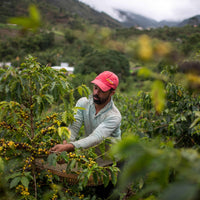
The Central Valley in Costa Rica in many ways epitomises the countries emotional bond to quality coffee with the lines between capital city and coffee farm blurred as they meet. Travelling into the zone of farms and micro-mills from San Jose, its not long before some of Costa Rica’s most regarded producers have their farms.

The Don Sabino micro mill in Sabanilla is relatively young, established fifteen years ago, although the Vargas family has produced coffee for more than a century. During this period, the mill has shifted to an exclusive focus on natural and anaerobic processing. This move reflects a wider change among Costa Rican micro mills as recognition grows for the quality and potential of naturally processed coffees from the country.

larocadepoaschart.webp

A velvety hazelnut nougat foundation acts as the perfect base for notes of raspberry, red apple, and honey. Cherry and brown spice undertones then roll onto a mandarin orange like citrus structure which holds the coffee together as it cools. A milk chocolate praline finish then builds at the end made all the better for a full, smooth, and silky sweetness.

This style of moreish and delicious coffee is perfect for brewing in lots of different ways, whether you drink filter, French Press or espresso. Filter leans to the nougat and red apple like aspects of the coffee while aeropress or French press will bring out more of the mandarin, berry and chocolate notes.

In espresso La Roca de Poas becomes dense nougat and dried fruit delight. Our starting recipe on a La Marzocco GS3/VST20g basket/EK43 grinder brews a silky sweet espresso with almond nougat, berry, honey and mandarin orange citrus on the finish:

Ratio: 1 : 2.21 ratio / 19g : 42.0g @ 93.6°C
Brew time: 29 seconds
TDS: 9.10%
Extraction: 20.85%
If you’re not sure about ratios this means ‘dry coffee weight: brewed coffee weight’. Weight is a more consistent way of measuring than volume and we always recommend using an inexpensive set of digital scales that have 0.1g resolution when brewing at home

larocadepoasillustration.webp

Estevan Vargas follows a terroir focused, minimal approach to post harvest production, of naturals with all coffees dried on raised beds. This method prioritises clarity and consistency, producing classic, low intervention natural coffees. As with many micro mills, each small plot owned by Estevan is harvested and processed separately, with individual lot names used to reflect site differences. This selection is a 100 percent Catuaí micro lot from the Roca de Poas plot, named after the Poas volcano that overlooks both the farms and the micro mill.

Delicious, moreish and very accessible is it a coffee full of flavour that represents their approach to classic naturals with aplomb.

You may also like